Every deck needs a finish, that part is simple. What’s not simple is figuring out whether to paint or stain a deck, because each option works differently, costs differently, and needs different care over time.
Paint seals the wood behind a thick, protective film. Stain soaks in and works from the inside out. Both have real strengths and drawbacks. This guide breaks down cost, durability, and maintenance for both finishes.
Paint vs. Stain: Understanding The Core Difference
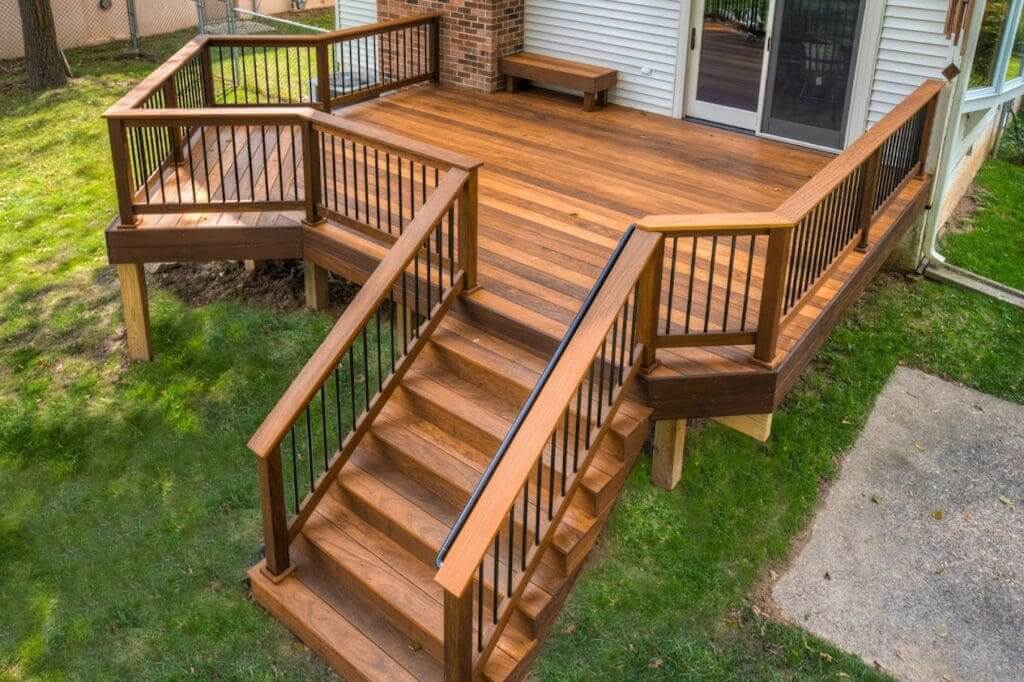
Deck paint sits on top of the wood. It forms a hard, opaque barrier that covers everything, including knots, discoloration, and grain and all. Deck stain works the opposite way. It soaks into the wood fibers and lets the natural wood grain come through. The look you get from each finish is completely different.
Painted decks look clean and polished, like a finished floor rather than raw timber. Stained decks hold onto that natural wood character. Paint also traps wood movement beneath it, which makes it more likely to crack and peel with time. Stain moves with the wood and tends to fade rather than fail.
Here’s a useful rule. Older decks with rough surfaces and damage do better with paint or solid stain, since both can hide imperfections well. Newer wood decks in solid shape show off their natural beauty best under a semi transparent or clear finish.
What your deck looks like right now should drive that choice.
What Does It Cost To Paint or Stain A Deck?
Cost depends on the deck size, the condition of the wood, the finish type, and whether you hire a professional. Budget friendly doesn’t always mean affordable long-term, especially when cheaper products need more frequent reapplication.
Here are the five main cost factors to know before budgeting:
- Material costs: Deck stain is generally cheaper than deck paint per square foot. A high quality product in either category costs more upfront but saves money over time through fewer touch-ups and longer life.
- Labor cost differences: Painting a deck with exterior paint is more labor-intensive than staining. It typically needs primer, at least two coats of finish, and thorough prep work to get a result that holds.
- Long-term costs: Quality deck paint can last close to a decade with proper maintenance. Stain needs attention every two to five years. Lower upfront cost doesn’t always mean lower overall cost.
- Cost variables: Bare wood and heavily worn surfaces often need extra sanding and primer before any finish goes down. Deck size and number of coats needed both push the total up or down.
- Hidden costs: Old finish removal, debris cleanup, and applying a sealer or sealant are easy to miss in an initial budget. Factor them in early so there are no surprises at the end of the project.
Durability: How Long Do Painted Decks And Stained Decks Last?
Being in the painting industry for over five years, finishing wood decks across Jacksonville Beach, Neptune Beach, and Ponte Vedra, our team has seen how Florida’s coastal conditions push every finish to its limits. Paint lasts longer on average.
A quality solid oil-based or latex paint formula can hold up seven to ten years on vertical surfaces like railings and siding on the house. Horizontal deck floors take more punishment from foot traffic and standing water, but the protection is still strong with proper application.
Stain has a shorter lifespan. Most stained decks need a fresh coat every two to five years, depending on sun exposure and use. Strong UV rays are standard along Florida’s coast, and they cause stain to fade faster than paint under the same conditions. That said, stain fails in a manageable way. It fades. Paint peels and cracks when it goes, and that’s a much bigger job to fix.
High traffic areas like stairs and deck entrances wear both finishes down faster. A stained deck past its couple years window just looks tired and dry. A badly neglected painted deck can look like it’s falling apart. The difference matters when you’re planning how often to stay on top of maintenance.
Factors That Influence The Paint or Stain Decision
There’s no single right answer here. Our advice as industry experts is always to look at your specific deck before choosing a finish. A few key factors should shape that decision. Here are the five most important ones:
- Wood type and age: Older decks with worn bare wood benefit most from paint or solid stain. Both can cover damage and create a clean, finished look. Younger wood in solid condition suits a semi transparent or clear stain that lets the wood grain come through naturally.
- Current surface condition: Deep cracks, heavy staining, and visible rot call for paint. Stain doesn’t hide imperfections the way paint does. If the surface has real problems, paint is the smarter call.
- Climate and regional weather: Coastal climates like Jacksonville Beach bring serious moisture and intense heat. Stain often performs better in that kind of weather because it penetrates the wood and doesn’t trap moisture beneath a surface film. In drier regions, paint offers better protection from the elements overall.
- Desired finish style: Personal preference matters here. Deck paint gives you a wide range of color options and shades. Deck stain enhances the natural grain without hiding it. One looks polished. The other looks organic. Both work.
- Maintenance tolerance: Stain demands more maintenance by frequency, but each refresh is far less work. Paint lasts longer between applications, but repainting is time consuming when that day eventually comes.
Types Of Deck Paint And Deck Stain Finishes Explained
Not every finish is built the same. The same product that works on a fence may not be ideal for a deck floor. Whether you’re using a brush, roller, or sprayer, understanding the finish type helps you match the right product to your surface.
Below are the main finish categories specifically designed for outdoor wood surfaces:
Solid Stain
Solid stain gives full color coverage while still soaking into the wood like a stain. It’s a practical fit for older decks that need to hide imperfections without the film-like look of paint. It fades over time rather than peeling, which makes upkeep straightforward.
Semi-Transparent Stain
A semi transparent finish lets the wood grain show while adding color and protection against moisture and UV damage. It works best on wood in decent shape where the natural beauty of the material is worth preserving.
Clear or Transparent Stain
A clear stain or sealer offers maximum visibility of the natural grain with basic protection against the elements. It’s the lightest option and suits newer wood in excellent condition. It needs the most frequent reapplication of any finish, sometimes every year depending on weather exposure.
Latex Deck Paint
Latex paint is water-based, easier to clean up, and faster to dry than oil alternatives. It forms a solid, opaque film that stays flexible and resists cracking better as wood expands and contracts with the seasons.
Oil-Based Deck Paint
Oil-based exterior paint soaks deeper before curing. The result is a durable, hard finish that performs well in demanding climates. It’s more time consuming to apply and dry, but the long run protection it offers on wood decks makes it a popular choice for high-exposure surfaces.
Maintenance: What Paint and Stain Each Demand Over Time
A freshly painted deck looks sharp. Keeping it that way for the next few years takes real effort. When paint starts to fail, you’re looking at full stripping, sanding down to a clean surface, a fresh coat of primer, and two coats of new finish to get back to baseline. Most homeowners tell us this is the part that catches them off guard. The repainting process is far more time consuming than applying it the first time.
Stain is more forgiving. A one coat reapply stain job is usually all it takes to enhance and refresh a tired deck. Products penetrate fast and are built to protect even in coastal heat and humidity. In most cases you skip the stripping entirely. Clean the surface, let it dry, and apply. Done.
The real cost of skipping maintenance shows up differently for each finish. Neglected paint lets moisture in once it peels, and that leads to rot in the boards underneath. That’s an expensive fix. Stain fades and leaves the wood open to uv damage and debris, but recovery is roughly half the work. Staying on schedule with either finish pays off in the long run.
Your Deck Deserves A Finish That Lasts. Let’s Make It Happen
Both finishes work well when matched to the right deck and the right conditions. The better choice comes down to your wood, your weather, and how much upkeep you’re willing to do.
At Pro-Vision Painting, Jacksonville’s Best of the Beaches 2024 winner, we’ve spent over five years finishing decks across Jacksonville Beach, Atlantic Beach, Neptune Beach, Ponte Vedra, and St. Augustine. Whether you want to paint or stain a deck at your home or business, we offer free estimates, honest communication, and a No-Surprise Guarantee so you know the cost before work starts.