Maybe your deck stain came out blotchy last time. Maybe it stayed tacky for days, or started peeling within a year when it should have lasted much longer. If you’ve noticed this, you’re not doing anything wrong. Jacksonville Beach’s air itself is working against you.
Most staining guides assume you can wait for a low humidity day and get it done. That assumption falls apart here. Humidity doesn’t come and go in this climate. It sits at high levels for most of the year, which changes how you need to plan a staining project from the ground up.
This explains exactly how humidity interferes with deck stain, why that plays out differently in a coastal, subtropical climate like this one, and what you can realistically do to get a better result.
How Humidity Affects Deck Stain
Humidity affects deck stain by slowing the evaporation of the solvents inside it. Deck stain needs those solvents to evaporate at a steady, even pace so the product can properly soak into the wood and cure. When the surrounding air already holds a lot of moisture, that evaporation stalls, and the stain’s whole timeline gets thrown off.
You might assume a stain that still feels wet or tacky the next day means something’s wrong with the product. Usually, it’s the humidity slowing the cure, not a flaw in the stain itself.
This is why the same product, applied the same way, can turn out smooth on one day and blotchy or tacky on another. The humidity level at the time you applied it usually explains the difference, not your technique.
Why Jacksonville Beach’s Climate Changes the Equation
Most humidity guidance assumes you can simply wait for a lower-humidity day. That assumption doesn’t hold up here. Jacksonville Beach sits in a humid subtropical climate, and elevated humidity shows up for most of the year rather than as an occasional condition.
Standard guidance targets a humidity range that appears regularly in many parts of the country throughout the year. Here, that ideal window narrows considerably, especially through the long summer stretch when humidity stays high day after day and afternoon storms add moisture right back into the air just as things start to dry out.
Waiting indefinitely for a perfect low-humidity day in this market often means waiting months. That’s not realistic for most homeowners. A better approach focuses on the best available windows this climate actually offers, not the ideal conditions you’d find somewhere drier.
This is why a staining approach built for a drier or more seasonal climate needs real adjustment here. Both your timing expectations and your application technique need to account for what this climate actually gives you to work with.
Why Salt Air Compounds the Problem
If your deck sits near the coast, salt air adds another layer on top of humidity. Salt particles floating in coastal air also attract and hold moisture against exposed wood surfaces.
This means a coastal deck deals with more than just ambient humidity during application. It’s also holding onto moisture that settled into the wood well before you ever picked up a brush.
This mirrors the same mechanism affecting painted exterior surfaces in this market, just applied to a different material and product. Consider a few factors that shift with proximity to the water:
- Decks closer to the ocean carry more accumulated salt exposure than decks further inland
- Wood already holding coastal moisture takes longer to reach a workable dryness level
- Salt buildup on the surface can interfere with even stain penetration if it isn’t cleaned off first
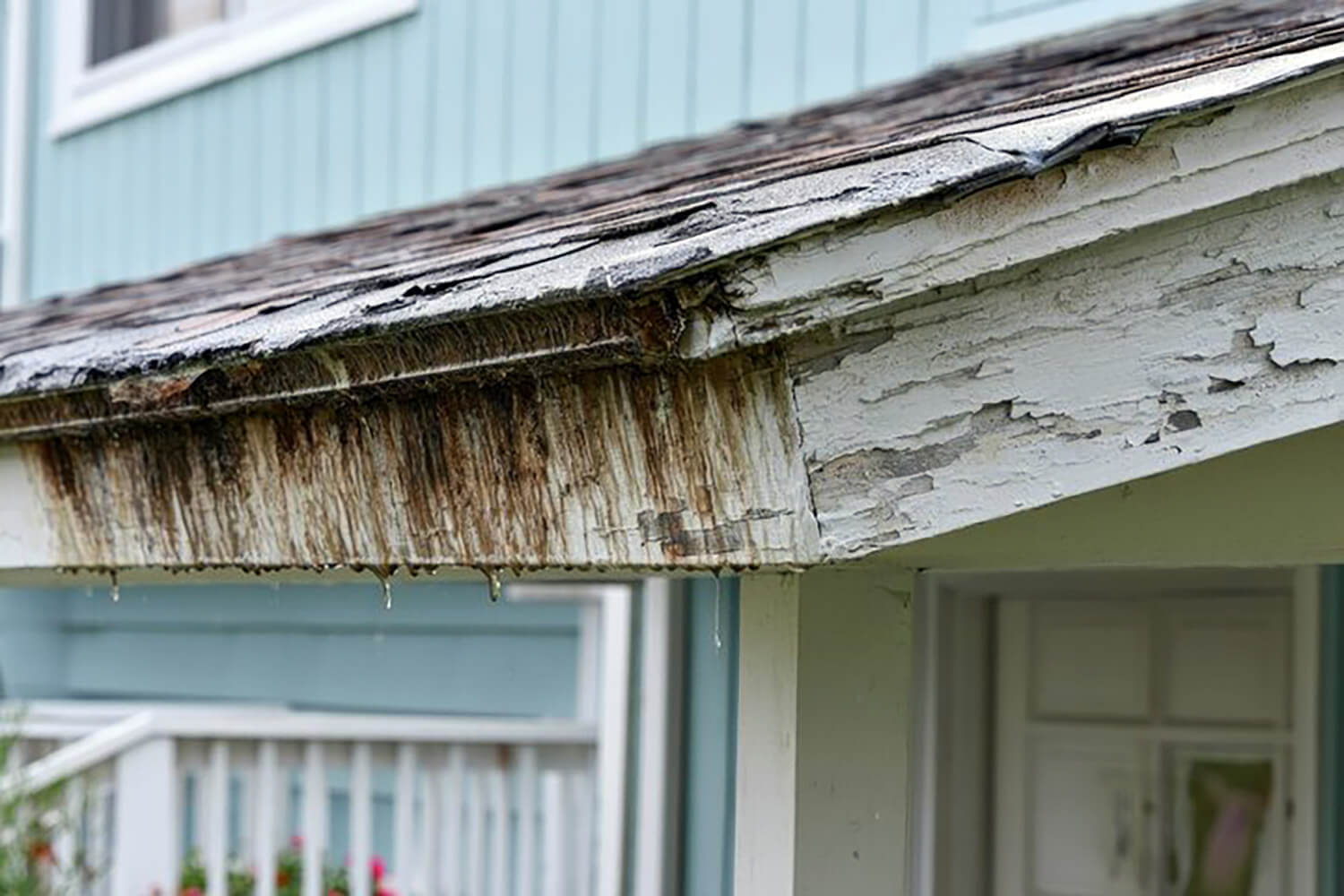
- Metal fasteners and hardware near the deck surface can corrode faster in salt air, and rust can bleed into nearby wood the same way it does on painted trim
This partly explains why coastal homeowners sometimes see their deck stain wear unevenly compared to a similar deck a few miles inland. It’s worth factoring into both your timing and your prep work if your deck sits close to the water. A thorough wash before staining removes salt residue that would otherwise sit under the new coat and quietly work against it.
Why Humid Conditions Raise the Risk of Mildew
Prolonged high humidity doesn’t just slow the staining process. It also creates ideal conditions for mildew to take hold on outdoor wood, both before you stain and after.
Mildew needs moisture and organic material to grow. A humid climate keeps wood decks damp for longer stretches than a drier climate would, and that gives mildew far more opportunity to establish itself. Shaded or poorly ventilated sections of a deck are especially vulnerable, along with areas under overhangs or near dense landscaping where airflow is limited.
You might mistake mildew on your deck for dirt or general wear. It’s actually a moisture-driven growth, and it needs proper cleaning before staining, not just a fresh coat over the top. A dedicated deck cleaner formulated to treat mildew, followed by a thorough rinse, addresses this before staining begins. Simply pressure washing without a cleaning solution often just spreads mildew spores across the surface rather than removing them.
Staining over existing mildew traps the problem under the new finish. It typically resurfaces within a season and undermines the work you just paid for.
How to Time Your Project for Realistic Conditions
The most realistic staining windows in this climate tend to fall during the cooler, less humid stretches of the year, roughly late fall through early spring. Humidity still shows up during these months, but it’s noticeably more manageable than the sustained high humidity of summer, when daily thunderstorms and thick, heavy air make consistent dry stretches hard to find.
Choosing the right time of day within that window matters just as much as the season. Mornings after the dew has burned off, but before afternoon humidity and heat peak, tend to offer more workable conditions than either early morning or late afternoon. A few things worth checking before you commit to a date:
- A realistic dry stretch in the forecast, both before and after staining
- Overnight humidity levels, since a single humid night can undo an otherwise good week
- Wood dryness at the surface and just below it, not just the day’s forecast
A simple way to check wood dryness beyond a visual glance is to press your hand against the deck boards, particularly horizontal surfaces and any spots shaded by furniture or planters. If the wood feels cool or slightly damp compared to the rest of the deck, it likely needs more time before staining, even if the forecast looks clear.
Planning around realistic windows, rather than waiting for ideal conditions that may not fully materialize, is what actually gets a staining project done in this climate.
How to Get Better Results in This Climate
A few adjustments help offset humidity’s effects when perfect conditions simply aren’t available:
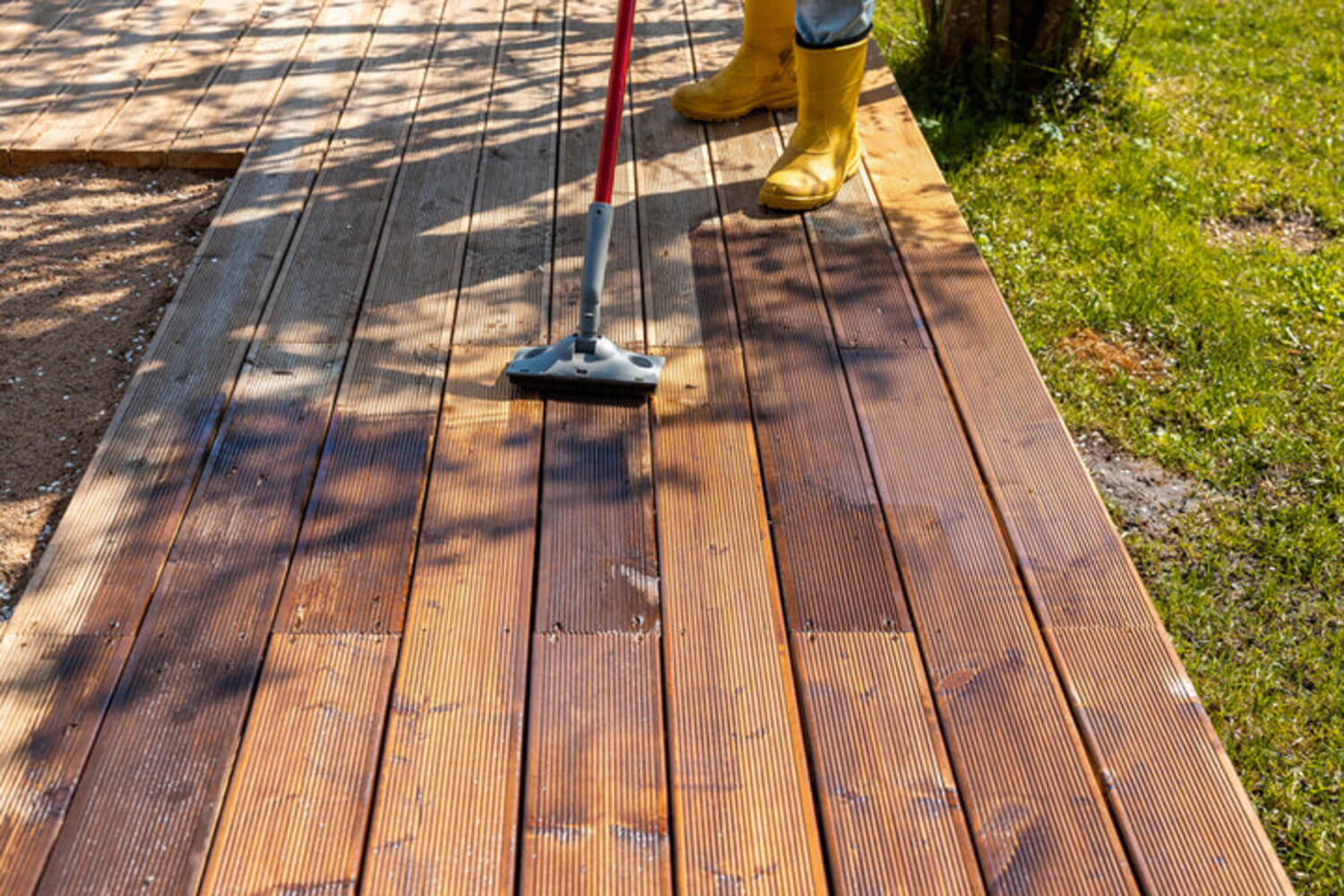
- Apply thinner coats. Thinner application gives the limited evaporation happening in humid air a better chance to keep pace with the stain, rather than leaving excess product sitting on the surface
- Confirm the wood is genuinely dry, not just surface-dry. Wood can look dry on top while still holding moisture underneath, especially after recent rain or heavy dew
- Allow extra time between coats. Humid air needs more time to let each layer properly cure before the next goes on, and rushing this step is one of the most common causes of a tacky or uneven finish
- Consider a stain formulated for humid or coastal conditions. Some products handle high humidity and salt exposure more predictably than others, and choosing the right one for this climate matters as much as timing the application correctly
- Work in smaller sections. Covering less area at a time keeps you from working ahead of the stain’s ability to properly set, which matters more here than in a drier climate
Homeowners who account for these adjustments typically get a more even, longer-lasting result than those who apply stain the same way they would in a drier climate and hope for the best.
Getting a Deck Stain That Actually Holds Up Here
Humidity affects deck stain by interfering with proper penetration and curing. In a climate like Jacksonville Beach’s, that effect compounds with near-constant humidity, coastal salt air, and elevated mildew risk. All three call for a different approach than standard staining guidance assumes.
Whether you’re trying to understand why a past project didn’t hold up, or you’re planning ahead for a new one, this explains why timing and technique matter more here than almost anywhere else.
We handle deck and fence staining with this climate in mind, from choosing the right week to preparing the wood properly before a single coat goes on. If you’d like a free quote for a professionally timed and prepped staining project, we’re happy to walk you through what that looks like for your deck. And if you have questions before then, feel free to reach out. We’re always glad to talk through your project.