How salt air affects exterior paint is something most homeowners along the Jacksonville Beach coastline don’t think about until their own paint job starts failing faster than it should. Maybe your siding is fading in a way that seems too fast for a paint job that’s only a few years old. Maybe you’ve noticed a chalky residue when you brush your hand against the wall, or you’re seeing small bubbles forming near a window frame that never used to be there.
You’re not imagining it, and it’s not just the Florida sun. Living directly on the coast means your home’s exterior is dealing with something homes further inland simply don’t face in the same way. Understanding exactly what’s happening, and why it doesn’t hit every home the same way, is the first step toward protecting the investment you’ve already made in your home’s exterior.
This breaks down what’s actually going on, why the damage shows up differently depending on what your home is built from, and what you can do to slow it down before it gets ahead of you.
How Salt Air Affects Exterior Paint
Salt air affects exterior paint by depositing microscopic salt particles onto every painted surface your home has. Those particles don’t just sit there. They attract moisture out of the humid coastal air and hold it against the paint film far longer than a normal rain shower would.
That trapped moisture is the real problem. It works its way against the bond between your paint and the surface underneath, softening that adhesion little by little. On its own, that would already shorten a paint job’s lifespan. But it’s not happening on its own.
Jacksonville’s intense UV exposure is working at the same time, breaking down the resins and pigments that give your paint its color and structure. Salt-driven moisture and constant sun exposure aren’t two separate problems. They’re compounding each other on the same surface, which is exactly why paint near the coast wears out faster than paint on a similar home just a few miles inland.
It’s a common misconception that it’s simply “the heat” or “strong sun” causing the damage. If that were the whole story, homes a few blocks from the water and homes fifteen miles inland would age at roughly the same rate. They don’t. The combination of salt and moisture is the variable that changes everything, and it’s why a home with heavy direct coastal exposure typically needs attention noticeably sooner than the same paint job would need further from the water.
Why Wood, Stucco, and Metal Wear Differently Near the Coast
Salt air doesn’t affect every exterior surface the same way. The material underneath your paint determines how the damage shows up and how quickly it happens. That matters directly here in Jacksonville Beach, where older wood-sided homes sit right alongside newer stucco construction, and most properties have painted metal fixtures mixed in with both.
Wood Siding and Trim
Wood is porous, so it absorbs salt-laden moisture directly into the material instead of the moisture just sitting on top of the paint. Once salt works its way into the wood grain, it keeps pulling in moisture even between rain events, which is what causes paint to lift from underneath rather than simply fading on the surface.
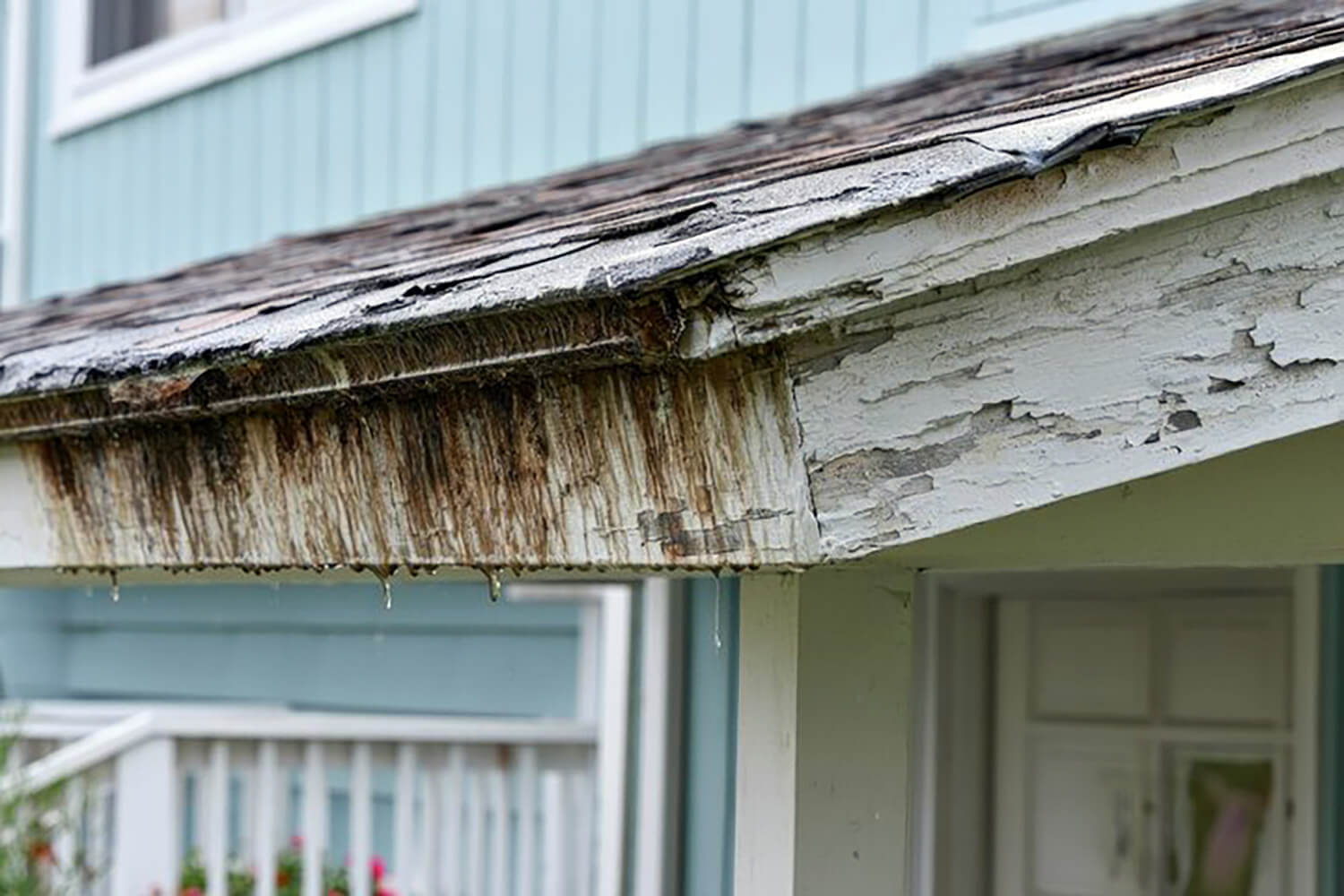
This is why older wood-sided homes in Jacksonville Beach often show peeling and blistering before they show noticeable fading. The failure starts from inside the material, not on the paint surface itself. It tends to show up first on horizontal trim boards, window sills, and fascia, since those surfaces collect more standing moisture than vertical siding does. Left unaddressed, that trapped moisture eventually leads to soft spots and rot, which turns what should have been a simple repaint into a repair project involving replacing damaged boards before any new paint can go on.
Stucco Surfaces
Stucco doesn’t absorb moisture the way wood does, but it’s prone to hairline cracking, and those cracks become the entry point for salt-driven moisture to get behind the painted surface. Once moisture gets behind stucco through a crack, it can’t evaporate as easily as it would on an exposed wood surface.
That’s why stucco failure often looks like localized bubbling or discoloration around cracks and joints rather than even wear across an entire wall. A stucco home can look perfectly fine from the street while it’s already failing at the crack lines and around window and door trim. These cracks tend to form first around corners, expansion joints, and areas where the stucco meets a different material, like a window frame or a roofline, since those transition points naturally flex more over time. Catching and sealing those cracks early is what keeps a paint job from failing years ahead of schedule on newer stucco construction.
Metal Fixtures and Hardware
Metal fixtures like railings, hinges, light fixtures, and exposed fasteners corrode faster in salt air, and that corrosion doesn’t stay contained to the metal itself. As rust develops, it bleeds outward and stains the paint on the surfaces around it. That’s why you’ll sometimes see orange or brown streaking near hardware even when the surrounding paint still looks decent.
This is often the first visible sign of coastal wear on a home, since metal corrodes faster than paint fails outright. Exposed screws and nail heads are usually the earliest to show it, followed by railings and light fixtures that sit closest to open air. Addressing corroding fixtures early prevents that staining from spreading into fresh paint after a repaint, which would undercut the value of the work you just paid for.
Why Your Distance From the Water Changes the Timeline
Salt air damage to exterior paint gets more severe the closer a home sits to open water. Salt particles are heaviest in the air right along the coastline and drop off measurably within just a few miles inland. That’s why two homes in what feels like the same general area can end up on very different repaint timelines.
Here’s roughly how that plays out across the service area:
- Homes directly in Jacksonville Beach, Atlantic Beach, and Neptune Beach face the most concentrated salt exposure, since they sit closest to the ocean
- Homes a few miles inland toward San Marco or central Jacksonville face noticeably less exposure, though homes near the Intracoastal still see elevated wear
- Homes further out in St. Johns County communities like Nocatee, Ponte Vedra Beach, or St. Augustine sit further from the heaviest exposure, though proximity to the St. Johns River can still bring some of the same effects
There’s no single universal answer for when a home near the coast needs to be repainted. Your actual distance from open water is one of the biggest factors in how soon you’ll start seeing the signs described next.
How to Recognize Salt Air Damage Before It Spreads
The earliest signs of salt air affecting your paint usually show up in this order:
- Fading and chalking. A powdery residue that rubs off on your hand when you touch the wall is a sign that UV exposure is breaking down the paint film
- Peeling or bubbling. This is trapped moisture lifting the bond between the paint and the surface underneath
- Failing caulk. Cracked or dried caulk around windows and trim is the same moisture and UV combination working on flexible seals instead of solid paint
- Rust staining. Orange or brown streaks near hardware and fixtures signal that corroding metal is bleeding into nearby painted surfaces
Each of these traces back to one of the mechanisms already covered above. Many homeowners wait until they see actual peeling before taking it seriously, but chalking and small caulk cracks are the earlier warning signs. Catching damage at that stage is far less costly than waiting until the damage is visible from the street, and it’s what allows for prep and touch-up work instead of a full repaint caused by more advanced failure.
How to Slow Salt Air Damage Down
Protecting exterior paint from salt air comes down to three habits working together rather than any single fix:
- Wash regularly. Gentle washing removes salt buildup before it has time to attract and hold moisture against your paint. It’s a maintenance habit, not a repair, but it meaningfully extends how long a paint job performs
- Address small issues quickly. Failing caulk and hairline cracks are easy to overlook, but catching them early stops moisture from getting behind the surface in the first place
- Use coastal-grade products and proper prep when it’s time to repaint. Paint and prep methods built for coastal exposure hold up longer against this specific combination of salt, moisture, and UV than standard products
Homes directly on the water benefit from washing more frequently than homes further inland, which ties back to the distance factor covered above. Homeowners who stay ahead of these habits typically get closer to the full expected lifespan out of their paint, while homes that skip maintenance often need attention years earlier than the same home would inland.
Protecting Your Paint Starts With Knowing What You’re Up Against
How coastal air affects paint on a house comes down to a combination of moisture retention, UV breakdown, and material-specific wear that shows up differently on wood, stucco, and metal, and how close your home sits to the water determines how fast all of it happens. If you’re already seeing fading, chalking, or peeling sooner than you expected, this is why, and knowing which mechanism is at play helps you understand whether you’re looking at a maintenance issue or something further along.
Salt air and paint longevity in Jacksonville Beach don’t have to be working against each other. We put proper prep and coastal-grade materials behind every exterior job we take on, whether it’s a full exterior painting project on a residential home or a commercial building dealing with the same coastal exposure. If you’re not sure where your home stands, we’re happy to take a look and give you a straightforward quote so you know exactly what you’re working with, no pressure to commit to anything today.